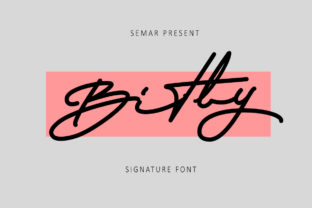
Bitly: A Modern Script Handwritten Font for Editorial Design
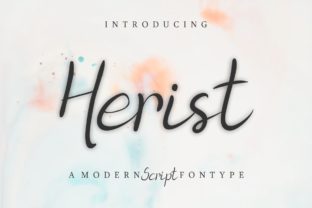
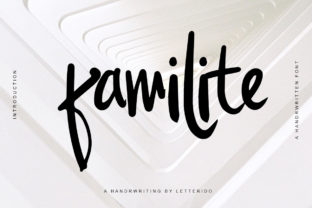
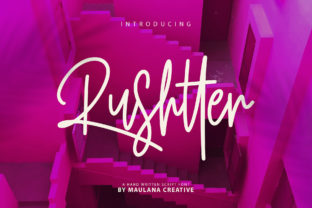
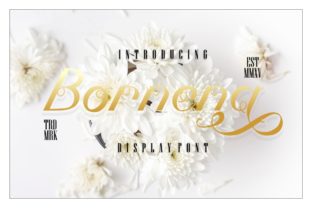
As a publisher and editorial designer who crafts digital magazines, branded newsletters, and print-ready ebooks, I’ve tested dozens of script fonts—many too ornate for screen reading, others too fragile for bold cover treatments. Bitly stands apart: a Script Handwritten typeface that balances authenticity with clarity, warmth with precision. Its fluid strokes feel human—not overly looped or exaggerated—but retain enough structure to hold visual weight across formats. Whether you’re designing a lifestyle blog header, an ebook cover for a mindfulness guide, or a printable wedding planner, Bitly delivers expressive personality without sacrificing legibility at medium sizes (18–36pt) on both web and print.
Bitly for Magazine Covers and Editorial Branding
Magazine covers demand instant tone-setting—and Bitly excels here. Unlike decorative script fonts that vanish in thumbnail views or blur on mobile, Bitly maintains crisp contrast and open counters, making it highly effective for cover titles even at 240px width. I used Bitly for the masthead of a quarterly digital magazine focused on slow living; paired with a warm serif body font (like Adobe Garamond), it created immediate visual hierarchy while reinforcing the publication’s handmade, intentional ethos. As a Script Handwritten font, Bitly supports consistent branding across issues—logo lockups, section dividers, pull quote banners—all without feeling repetitive. For publishers licensing content or selling print editions, Bitly is a commercial font cleared for use in PDF exports, EPUBs, and subscriber-only templates.
Bitly for Ebook Titles and Chapter Openers
When readers scroll through a Kindle or flip through a PDF workbook, first impressions hinge on typography. Bitly works powerfully for ebook titles and chapter headings—especially in niches like coaching, wellness, and creative entrepreneurship where voice and approachability matter. Its gentle slant and natural rhythm echo handwritten notes, inviting trust before the first sentence. I paired Bitly with a clean sans serif (Inter or Lato) for body text in a 120-page digital course on journaling—resulting in clear visual pacing: Bitly signaled “pause and reflect,” while the sans serif supported sustained reading. As a Fonts asset, Bitly includes standard ligatures and stylistic alternates, allowing subtle variation between chapter titles without manual tweaking.
Bitly for Newsletter Headers and Social Quote Graphics
Newsletters live in tight vertical spaces—email clients, mobile feeds, RSS previews. Bitly performs well here when used selectively: as a header above a short lead paragraph, or as bold accent text in a social media graphic shared from your newsletter. Its compact x-height and moderate stroke contrast ensure readability at 20–28pt even in Gmail’s compressed rendering. For creators building audience engagement through visual storytelling, Bitly adds warmth to quote graphics—think a line from your latest essay rendered in Bitly over a muted photo background. Because it’s a modern Script Handwritten font, it avoids the dated flourishes of older calligraphy fonts, aligning more closely with current design sensibilities across Instagram, Substack, and Medium.
Bitly for Wedding Invitations and Elegant Branding
While not exclusively a wedding font, Bitly shines in invitation suites where elegance meets accessibility. Its lowercase ‘g’ and ‘y’ have graceful descenders, and its uppercase letters carry presence without stiffness—ideal for names, dates, and venue lines. More importantly, Bitly scales beautifully across formats: printed letterpress cards, digital RSVP pages, and matching social media announcements. As a Fonts choice for small creative studios or independent stationers, Bitly supports cohesive brand expression—from logo lockup to envelope addressing—without requiring multiple font families. Its Script Handwritten character feels personal but never childish, refined but never cold.
Bitly for Business Cards and Print-Ready Brand Assets
Business cards are tiny billboards—every millimeter counts. Bitly fits naturally into compact layouts: a name in Bitly, title in a neutral sans serif, contact details in a light-weight monospace. Its spacing is optimized for short bursts of text, avoiding awkward gaps or crowded letters. I’ve used Bitly for freelance editorial designers’ cards—where the font subtly signals creativity and attention to craft, without overshadowing the service offered. As a commercial Fonts license, Bitly permits unlimited use across client deliverables, including print-ready PDFs, branded slide decks, and presentation templates—no hidden restrictions for agencies or solo creatives billing by project.
Bitly for Posters, Headlines, and Branded Printables
From workshop handouts to downloadable worksheets, Bitly elevates functional printables into memorable brand touchpoints. Its Script Handwritten energy makes headers feel alive—“Your Weekly Reflection Prompt” or “Recipe Notes” gain quiet authority when set in Bitly. In poster design, it pairs strongly with high-contrast photography or minimalist illustration, acting as a focal point without competing visually. For creators selling Canva templates or Notion workspaces, Bitly adds distinctive flair to title blocks and section headers—while remaining fully embeddable in exported PDFs and PNGs. Just confirm your license includes redistribution rights if bundling Bitly with editable templates sold online.
How to Pair Bitly With Readable Body Fonts
Bitly is a display font—not meant for long-form reading. But its strength lies in contrast: pair it with a highly legible serif (e.g., Charter or PT Serif) for ebook body copy, or a friendly sans serif (like Poppins or Source Sans Pro) for newsletters and web articles. Avoid pairing with other scripts or overly decorative fonts—Bitly needs breathing room to resonate. For bilingual publications, check whether your Bitly package includes extended Latin support; most modern Script Handwritten fonts cover accented characters used in French, Spanish, and Portuguese publishing contexts.